For the past fifteen years, the tech industry has operated under a single, unquestioned commandment: Move everything to the cloud.
We migrated our databases, centralized our application logic, and turned our user devices into glorified, thin-client windows into remote server farms. The standard SaaS playbook became incredibly predictable: the client makes a network request, waits for the backend, the backend queries a centralized database, and the client finally renders the response.
It worked, until it didn’t. Every developer knows the pain points of this model. If a user’s internet stutters, the app freezes. If a cloud provider goes down, entire businesses grind to a halt. We’ve spent millions of collective engineering hours building complex loading spinners, optimistic UI updates, and retry-logic frameworks just to mask a fundamental truth: making users wait on the network is a terrible user experience.
Right now, a quiet but massive rebellion is gaining ground against traditional, cloud-obsessed SaaS architecture. It’s called Local-First Development, and it is completely flipping the modern deployment stack on its head.
Instead of moving data away from the user, the smartest engineering teams are moving it right back to the device.
What Exactly is "Local-First"?
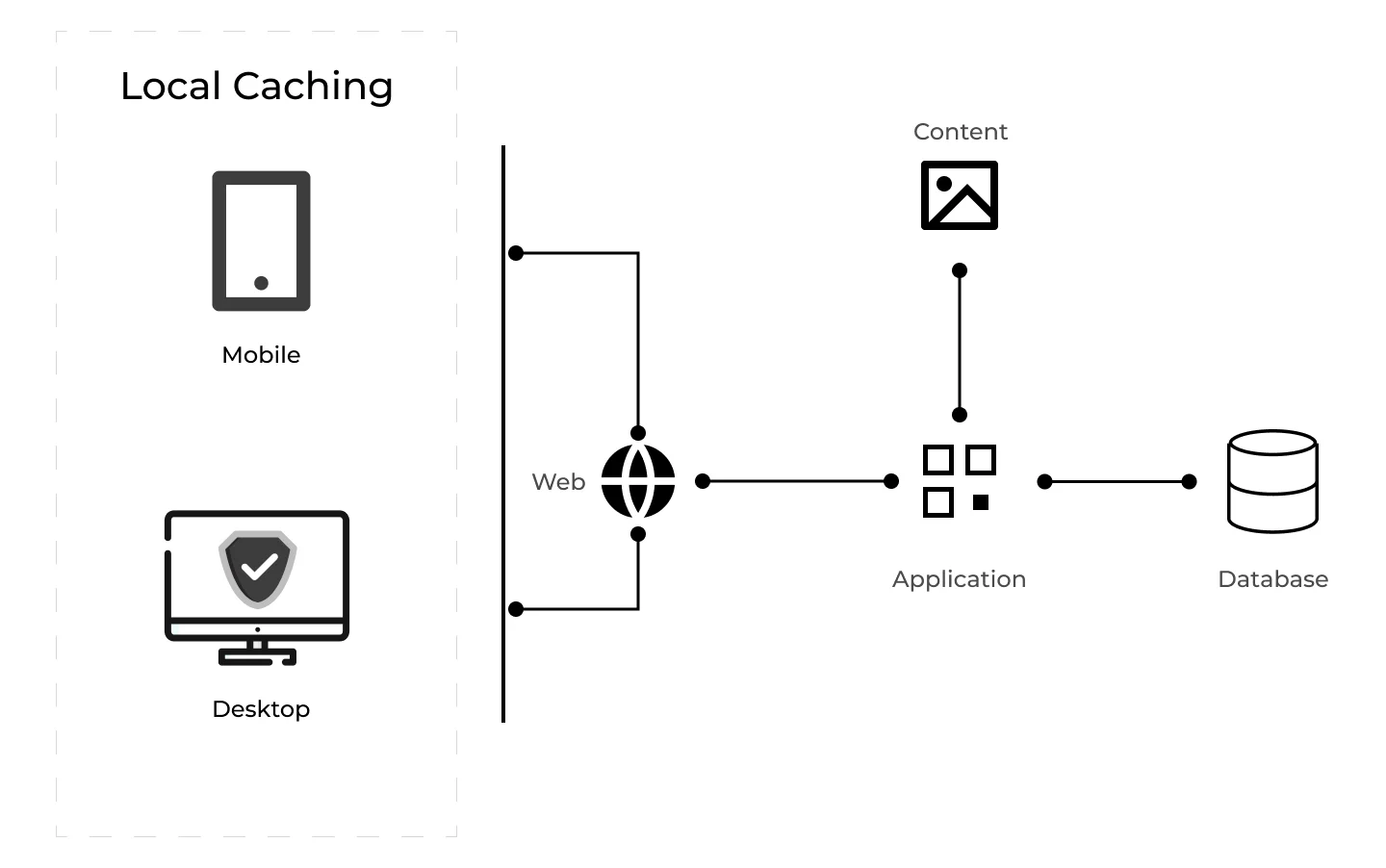
To understand local-first, it’s easier to look at what it isn't. It is not just adding a shallow offline cache (like a simple Redis store or basic browser LocalStorage) to a standard web app.
In a traditional cloud-first app, the remote database is the ultimate source of truth. If the device cannot talk to that database, the app is effectively broken or severely crippled.
Local-first architecture turns the client into the primary source of truth.
The core application logic, the database engine, and the user’s actual data live natively on the user's desktop, laptop, or smartphone. The application reads and writes directly to the local disk at hardware speeds. The cloud is no longer a gatekeeper; instead, it is demoted to a passive collaborator. When a network connection is available, the local database syncs changes asynchronously with a remote cloud database or directly with other peer devices.
Why This Paradigm Shift Matters Right Now
This isn't just a niche trend for note-taking apps; it’s a fundamental realignment of how we think about software resiliency, user ownership, and distributed systems. There are three core reasons why this shift is accelerating:
1. Instantaneous UX by Default
In a local-first system, network latency is completely eliminated from the user interaction loop. Because every write and read happens against a local, on-device database, operations take microseconds instead of hundreds of milliseconds. There are no loading spinners, no API timeouts, and no awkward UI freezes. The application feels as fast and responsive as a native desktop utility from two decades ago, combined with the collaborative power of modern web apps.
2. Resilience by Default
In traditional web development, handling an "offline state" is a massive headache. It usually involves patching in complex error-handling, queueing failed requests, and praying that the state doesn't corrupt when the user reconnects. With local-first, offline isn’t a feature or an error state, it is the default state of the system. The app operates exactly the same way whether the user is deep in a basement with zero bars or connected to a gigabit fiber line.
3. CRDTs and the Death of Manual Merge Conflicts
Historically, the biggest barrier to building local-first apps was conflict resolution. If two users edited the same piece of data offline and then reconnected, merging those changes without losing data was an absolute nightmare.
The breakthrough making local-first viable at scale today is the maturity of Conflict-free Replicated Data Types (CRDTs) and state-syncing primitives. Technologies like Yjs, Automerge, and specialized local-first sync engines allow concurrent updates to merge automatically and mathematically across multiple devices without requiring a centralized coordinator or throwing messy manual merge exceptions.
The Broader Cultural Shift: Ownership and Autonomy
This architectural pivot isn't happening in a vacuum. It aligns with a massive cultural undercurrent sweeping through the broader tech ecosystem: a growing demand for data privacy, user autonomy, and a rejection of predatory, lock-in heavy platform ecosystems.
For years, big tech platforms have centralized infrastructure to optimize for cloud computing bills, data harvesting, and continuous subscription revenue, often at the expense of user experience and privacy. Local-first strips away that centralized control. When your data lives on your machine, you own it. If the SaaS company goes bankrupt or changes its pricing model tomorrow, your software still works perfectly on your computer.
We are seeing this exact same desire for system autonomy manifest in desktop computing environments. The steady, accelerating migration of developers and power users from locked-down operating systems like Windows over to open-source Linux distributions isn't a coincidence. Users are tired of telemetry, forced cloud synchronization accounts, and operating systems that treat local hardware as a billboard for cloud services. They want their local machines to belong to them again.
Local-first development brings that exact same philosophy to application design.
The Big Takeaway
The future of software engineering isn’t about blindly building bigger, more expensive cloud infrastructure to pad the margins of infrastructure monopolies. It is about building highly resilient, truly distributed systems that respect the compute power sitting right in front of the user.
As developers, architects, and builders, our primary goal should be creating software that is robust, blazingly fast, and respectful of the user's digital sovereignty.
It’s time to stop treating the device as a dumb terminal. Stop making your users wait on the network. Lean into the edge, master distributed data structures, and start building software that puts the local device first.
Comments (0)
No comments yet.